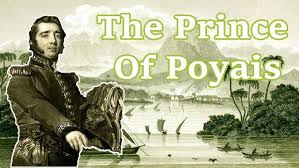
History is filled with curious tales of explorers discovering lost cities and secret lands. However, few stories are as perplexing as that of Poyais, a country that allegedly existed in the 19th century but vanished from both maps and memory. This land, described as a paradise flowing with gold, rivers, fertile lands, and majestic mountains, captured the imagination of many. Yet, to this day, nobody can find it. Why? Because this mysterious country never existed. The story of Poyais is, in fact, one of the greatest frauds in history, orchestrated by none other than Gregor McGregor.
In this article, we will dive deep into the fascinating yet tragic tale of Poyais and how McGregor scammed hundreds of people into believing in a fictional land.
Table of Contents
The Mysterious Land of Poyais
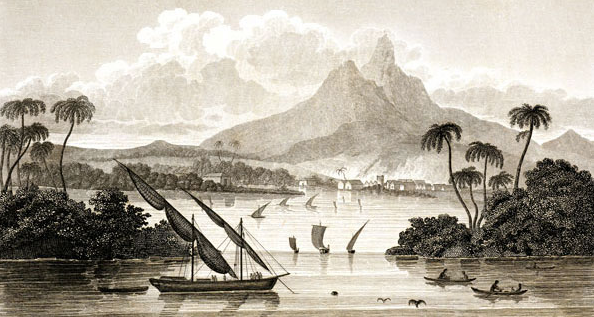
Imagine a country so rich that its rivers flowed with gold and silver, its lands were fertile, and its infrastructure rivaled the most advanced cities in the world. This was the vision that Gregor McGregor painted when he returned to London in 1820 after his adventures in South America. McGregor claimed to have discovered this paradise on the Mosquito Coast between North and South America. According to him, the capital city of this magical country was called St. Joseph, and the country itself was called Poyais.
He portrayed Poyais as an established nation with a democratic government, a functional army, and even a central bank. But there was one problem: Poyais did not exist.
The Man Behind the Scam: Gregor McGregor
Born in Scotland in 1786, Gregor McGregor had an impressive military career, fighting against the Spanish Empire in Latin America. But beneath his military achievements was a man with a sharp eye for deception. McGregor was no stranger to manipulating facts and people for his benefit. By the time he was 24, he had already faked his way into the upper ranks of the British army and even married into wealth for power and status.
However, his greatest deception came when he returned to London with the fabricated story of Poyais. McGregor declared himself Prince of Poyais, bestowed with this title by the native king of the land. He described the nation as an unspoiled utopia and invited settlers to come and invest in its prosperity.
The False Promises of Wealth and Prosperity
To convince people that Poyais was real, McGregor went to extraordinary lengths. He created Poyaisian embassies, wrote books about the country, and gave interviews to prominent newspapers. His marketing was impeccable. He produced bonds, currency, and even land grants for Poyais, which people could buy, ensuring them a piece of this paradise.
In a short time, thousands of people in London, including government officials and bankers, were captivated by McGregor’s dreamland. He managed to raise millions of dollars by selling land and bonds of Poyais to eager investors and settlers. The thought of becoming part of a new world filled with riches and opportunities was too good to pass up.
But none of these investors or settlers had any idea that Poyais did not exist.
The Journey to Poyais: A Nightmare Unfolds
In September 1822, the first ship set sail from London to Poyais. Aboard were hundreds of hopeful settlers, men, women, and children, all dreaming of starting a new life in this paradise. But what awaited them was far from the heaven they had imagined. After a long journey across the Atlantic, they arrived at the Mosquito Coast only to find an empty, desolate land. There was no city, no infrastructure, and certainly no gold or silver in the rivers.
The settlers were left stranded in a foreign jungle with no resources or shelter. It soon became evident that they had been scammed. But it was too late. With no way to return to England, many settlers died from hunger, disease, and the harsh conditions of the jungle.
The Aftermath of the Poyais Scam
When news of the disaster reached London, the truth about Gregor McGregor and his fictitious country began to unravel. Authorities were quick to shut down the remaining voyages to Poyais, and the British Navy intercepted the ships still on their way to this imaginary land.
Many investors who had poured their life savings into Poyais were left devastated. The scale of the fraud was so massive that it almost caused the London Stock Exchange to collapse. McGregor had effectively committed one of the largest financial scams of the 19th century, defrauding both ordinary citizens and the wealthiest elites of London.
How McGregor Escaped Justice
One would think that a man responsible for the deaths of hundreds of settlers and the loss of millions of pounds would face swift and severe justice. However, that was not the case for Gregor McGregor. Despite the magnitude of his crimes, he fled to France, where he continued his deceitful ways.
In France, McGregor once again attempted to sell the dream of Poyais, this time to the French people. He succeeded in scamming even more investors until the French authorities grew suspicious. McGregor was eventually arrested, but his connections with the British government ensured that he would not face the consequences of his actions.
After spending a brief time in jail, McGregor returned to Britain, where he lived the rest of his life in relative comfort. He never faced any serious repercussions for his fraudulent activities, and when he died in 1845, he was even given a military funeral, honoring his service rather than condemning his crimes.
The Legacy of the Poyais Scam
The story of Gregor McGregor and Poyais is a cautionary tale that resonates even today. It serves as a reminder of the power of persuasion and how people can be manipulated by promises of wealth and prosperity. McGregor’s elaborate scheme is often cited as one of the first examples of a Ponzi scheme, where early investors are paid off with the funds from new investors.
Though Poyais never existed, its story continues to intrigue historians and scam analysts alike. McGregor’s ability to create an entire country out of thin air, complete with fake documents, currency, and land titles, is a testament to his cunning.
Why Did People Believe in never existed.
Yes, you read that right. The country of Poyais, hailed as a land of wealth and prosperity, was nothing more than a clever hoax. This deception was orchestrated by a man named Gregor MacGregor, a Scottish adventurer and con artist. MacGregor not only convinced thousands of people that Poyais was real, but he also made them invest their savings, all for a country that only existed in his imagination. Let’s dive into this incredible tale of deception, ambition, and one of the greatest frauds in history.
1. The Birth of Poyais: A Paradise Imagined
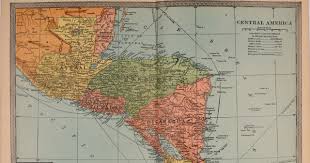
Gregor MacGregor first “discovered” Poyais in the early 19th century. According to his account, Poyais was located on the Mosquito Coast of present-day Honduras and Nicaragua. The land was portrayed as a fertile paradise, with natural resources beyond measure. MacGregor described it as a place where gold flowed through rivers, where lush vegetation and wildlife flourished, and where a sophisticated government and infrastructure were already in place.
In addition to its natural beauty, MacGregor claimed that Poyais had a thriving capital city, St. Joseph, complete with well-built houses, an army, a central bank, and a democratic government. According to him, the local king had been so impressed by MacGregor that he had named him “Cazique” (or Prince) of Poyais and entrusted him with developing the land by bringing settlers from Europe.
It all sounded too good to be true – and it was.
2. Selling the Dream: MacGregor’s Deception
After returning to London in 1821, MacGregor began an elaborate campaign to promote Poyais. He wrote books, gave interviews, and even set up embassies for his fictional country. The “Cazique” told grand tales of this unexplored paradise, stirring up excitement among London’s middle and upper classes. The British public, hungry for opportunities to invest and settle abroad, fell for MacGregor’s story.
He offered settlers the chance to purchase land in Poyais at a bargain price and invest in government bonds, promising huge returns. MacGregor also issued a special currency for Poyais, which he encouraged investors to exchange their British pounds for, claiming that it would be the only legal tender in the country. The demand was overwhelming. Thousands of investors, many of whom were ordinary people, poured their life savings into the venture.
By 1822, MacGregor had raised millions of dollars from his unsuspecting victims. But the worst was yet to come.
3. The Journey to Poyais: A Deadly Reality
The first ship carrying settlers to Poyais set sail from London in September 1822. These settlers were filled with hope and excitement, imagining a new life in a land of plenty. They had been told that they would be greeted by officials from Poyais upon arrival and that their new homes and lands would be waiting for them.
However, what they found when they reached the shores of the Mosquito Coast was a far cry from the paradise they had been promised. Instead of a bustling city or a thriving community, the settlers found nothing but dense jungle and desolation. There was no city, no government, no houses, and no infrastructure. Poyais simply didn’t exist.
The settlers were stranded in an uninhabitable wilderness. With limited supplies, no shelter, and no way of returning to Britain, many fell ill. Starvation, disease, and infighting soon followed. The tragic outcome of this deception saw many settlers die, while the survivors were eventually rescued by a passing British ship.
4. MacGregor’s Escape and the Collapse of the Scam
Meanwhile, back in London, news of the settlers’ disastrous journey had not yet reached the public. MacGregor, oblivious to the suffering he had caused, continued to raise money and promote Poyais. It wasn’t until survivors of the first expedition returned to England in 1823 and told their harrowing stories that the truth began to unravel.
Realizing the walls were closing in, MacGregor fled to France to escape prosecution. Incredibly, he attempted to pull the same scam on the French, trying to sell Poyais to a new wave of investors. However, the French authorities became suspicious when too many people started applying for passports to travel to a country that didn’t appear on any map. MacGregor was arrested in France in 1825, but shockingly, he was acquitted and released due to a lack of evidence.
5. How Did MacGregor Pull It Off?
One of the biggest questions surrounding the Poyais scam is how Gregor MacGregor was able to deceive so many people for so long. The answer lies in a combination of factors:
- His Charisma: MacGregor was incredibly persuasive. He had a natural charm and confidence that made people believe in him. His military background and his fabricated title of “Cazique of Poyais” lent him an air of authority and credibility.
- The Timing: The early 19th century was a time of intense economic uncertainty. People were looking for new opportunities, and the idea of a fertile, untapped land was very appealing. Moreover, European nations were heavily invested in colonial expansion, which made the idea of Poyais plausible.
- The Lack of Communication: In the 1820s, information traveled slowly, and it was difficult to verify claims about distant lands. Many of MacGregor’s victims were ordinary people who had no way of confirming whether Poyais existed.
- Public Trust in Soldiers: MacGregor had served in various military roles, including fighting for the independence of Venezuela and other Latin American countries. His reputation as a war hero helped win the trust of both investors and the British government.
6. The Aftermath: A Legacy of Suffering
The consequences of MacGregor’s deception were devastating. Hundreds of people lost their lives in the jungles of the Mosquito Coast, and thousands more were financially ruined. The Poyais scheme also had a broader economic impact, as it caused a crisis of confidence in the London financial markets, leading to a stock market crash in 1823.
Despite the catastrophic fallout, MacGregor never truly faced justice for his actions. After his release from French prison, he returned to Britain and continued to live comfortably. He even attempted to revive the Poyais scheme a few more times, though on a smaller scale, before retiring to Venezuela, where he died in 1845.
Incredibly, MacGregor was given a full military funeral, and his fraud was largely forgotten by the public. His victims, meanwhile, were left with nothing.
7. Lessons from the Poyais Scam
The story of Poyais offers important lessons that remain relevant today. It serves as a reminder of how easily people can be deceived by charismatic figures and grand promises, especially in times of economic hardship. The Poyais scam also highlights the dangers of insufficient oversight in financial markets, as well as the importance of skepticism and critical thinking when evaluating new opportunities.
In the modern world, scams and frauds have evolved, but the basic principles of deception remain the same. Whether it’s a fake country or an online investment scheme, the key is always the same: if something sounds too good to be true, it probably is.
8. The Legacy of Gregor MacGregor
Today, Gregor MacGregor is remembered as one of history’s most notorious con men. His audacious scam is often cited as one of the greatest frauds ever committed. The story of Poyais, though less well-known than other historical events, is a fascinating tale of ambition, deceit, and the human capacity for belief in the unbelievable.
MacGregor’s ability to sell an imaginary country and convince thousands of people to invest their savings in it is a testament to the power of persuasion and the dangers of blind faith. Even though Poyais never existed, its story continues to captivate historians and serve as a cautionary tale.
You may also like: Why Genghis Khan Never Invaded India?
Conclusion
The mysterious country of Poyais was nothing more than a figment of one man’s imagination, but it had real, devastating consequences for those who believed in it. Gregor MacGregor’s elaborate hoax cost hundreds of lives and ruined many more, yet he escaped justice and lived out his days in relative comfort.
The tale of Poyais is a reminder that even the most outlandish stories can seem believable when presented with enough confidence and charisma. It teaches us the importance of questioning what we are told, especially when it comes to promises of untold riches or easy success.
In the end, the country of Poyais may have been a lie, but its lessons are very real.



One thought on “5 Shocking Facts About Poyais : The Greatest Fraud in History by Gregor MacGregor””